
BestOnlyFans treats a prepaid card as a behavioral tool, not just a privacy method, and that framing is the fastest way to control OnlyFans spending. Prepaid budget locking works because it converts your monthly limit into a fixed, pre-funded balance, so every purchase must fit inside money you already set aside. BestOnlyFans refreshes its rankings every month.
This guide explains why ordinary debit and credit cards allow gradual overspending, which prepaid products work for subscriptions, and how to build hard monthly caps.

Why Traditional Cards Enable OnlyFans Budget Creep
On a normal account, a subscription or a pay-per-view unlock takes two taps, and the bank balance updates somewhere in the background. That missing pause is the mechanism behind budget creep, and it plays out through four predictable friction losses.
- Saved card details: stored payment information eliminates re-entry, so there is no typing pause between intention and purchase.
- Incremental PPV purchases: individual PPV messages unlock up to $50, but each one feels small next to the monthly total they build.
- Auto-renewal invisibility: renewals happen on the platform’s schedule, not yours, and silent charges never trigger a decision.
- Tip impulses: tips can reach $100, and there is no balance feedback at the moment of sending.
Together they explain how a subscriber planning to spend $20 finishes a month at $60 without a single large purchase.
The core problem is not willpower, it is feedback timing. A normal card tells you what you spent after the fact; a prepaid balance tells you what remains before you spend it.
Prepaid Card Mechanics for OnlyFans Transactions
The five categories below generally work when they carry a major card network logo and support address registration.
- Major brand gift cards registered with a billing address, which converts an anonymous card into one that can pass address verification.
- Bank-issued reloadable prepaid debit, which behaves closest to a standard card and usually supports recurring charges.
- Digital prepaid accounts with virtual card numbers, useful when you want a fresh number for each subscription.
- Retailer-specific reloadable products carrying a Visa or Mastercard logo, widely available and easy to top up in cash.
- International prepaid options with currency conversion, relevant if your local currency is not the billing currency.
Verification is the practical hurdle. OnlyFans places a $0.10 card verification hold when you add the card, and that amount returns within days. If a card cannot hold a small temporary authorization, it will fail the check before any subscription is attempted.
A card that reloads instantly through a mobile app suits a monthly load cycle, while a cash-reload card adds deliberate friction.
Setting Up Hard Monthly Caps with Prepaid Structures
A hard cap starts with one number: the maximum you are willing to spend in a calendar month. Convert that number into a single prepaid load, then let the card balance enforce the limit instead of relying on tracking.
| Budget Level | Suggested Prepaid Approach | Renewal Buffer Strategy |
|---|---|---|
| Under $15 monthly | Single-load gift card registered with your billing address | Load one month plus a small cushion for a verification hold |
| $15 to $40 monthly | Reloadable prepaid debit with one planned load per month | Load on the same date each month, two days before the earliest renewal |
| Over $40 monthly | Subscription-only card plus a separate discretionary card | Fund subscriptions fully first, then cap the discretionary card separately |
Load the card shortly before your earliest renewal date so the balance is never idle for long stretches.
A promotional first month may sit below the standard floor, such as a $3 opening month, but the regular recurring price still starts at $4.99 and can run as high as $49.99. Plan for the regular base price, not the introductory one.
Wallet Credit Strategies and Their Limitations
OnlyFans also lets you hold credit inside the platform wallet. Internal credit is convenient for automatic renewals but carries a carryover risk: unspent balance stays available and tends to get spent later. The table compares the main funding approaches.
| Approach | How It Works | Primary Risk |
|---|---|---|
| Large lump-load for quarterly budgeting | One deposit covers three months of planned spending | Balance is visible and available, encouraging earlier spending |
| Exact monthly match | Fund precisely the expected total with zero carryover | Any extra purchase fails unless the card is reloaded manually |
| Creator-specific allocation | Mentally or physically divide funds per subscription | Complex to maintain once creators change prices or pause pages |
| Hybrid prepaid plus wallet | Prepaid card for new purchases, wallet for automatic renewals | Two balances to track, and quiet drift between the two |
The 20% platform fee applies to everything, with the creator keeping 80%, so your spending total is unaffected by the split.
OnlyFans has no built-in discovery feed or directory, which is why ranking sites exist. Community ranking discussions such as the best reddit to promote onlyfans threads are sometimes used by subscribers to compare notes on how pages handle pricing changes.
Automated Reload Rules vs. Manual Loading Discipline
When a card tops itself up, the balance stops being a limit and becomes a suggestion.
An automatic reload matches your budget on paper but never forces you to review whether the budget still fits. A manual load forces a monthly review, and it produces a natural stopping point when the balance runs low.
If you choose automated reloads, set the reload amount below your true ceiling. A reload figure that exactly matches your maximum leaves no room for the month when a renewal cluster or a PPV purchase pushes past the plan.
A middle path works for many subscribers: keep automatic reloads switched off, but set a phone reminder on the same date each month to review subscriptions first and load second.
Handling Subscription Renewals Within Prepaid Constraints
Multiple subscriptions with different renewal dates compete for one prepaid balance. Calendar management solves this, and the process below turns a scattered set of dates into a known monthly outflow.
- List every active subscription with its exact renewal date and current base price.
- Total the minimum guaranteed outflow, which is the sum of base prices with no PPV or tips included.
- Load the prepaid card with that total plus a discretionary buffer you are comfortable spending.
- Set a reminder two days before each renewal to confirm the prepaid balance covers it.
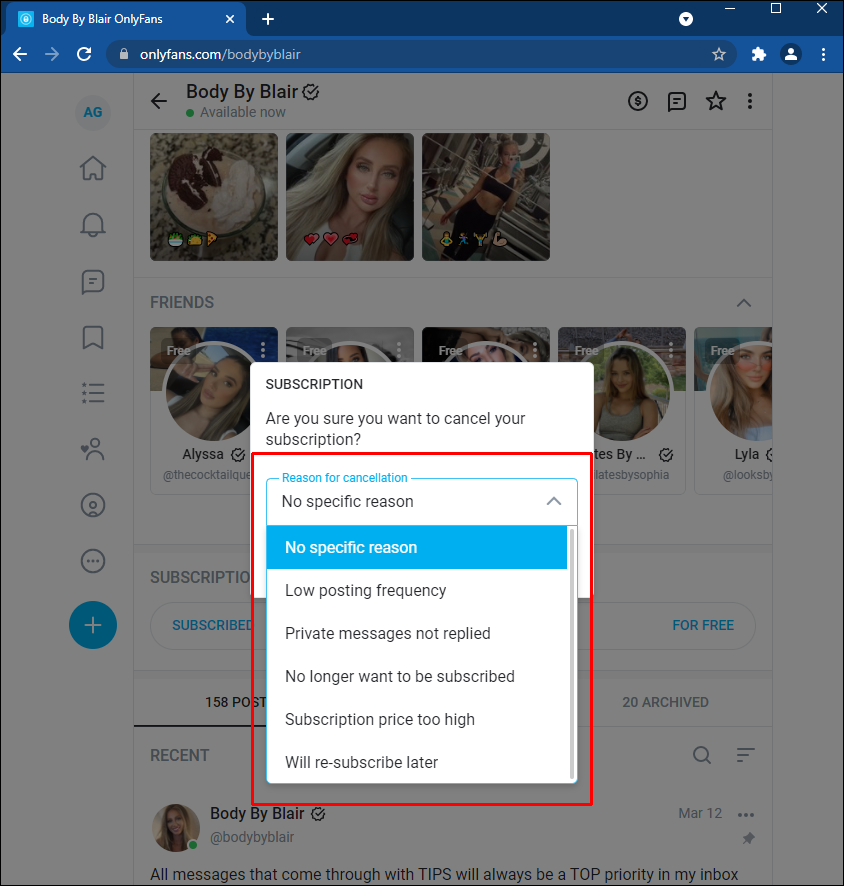
Price changes add a wrinkle. When a creator raises the base price, auto-renew stops, and existing access lasts until the paid period ends. That gap gives you a clean moment to decide whether the new figure still fits the prepaid plan.

Edge Cases: Holds, Verification, and Unexpected Charges
Build a modest buffer into every load so these four situations never cause a failed renewal.
- New subscription verification hold: a $0.10 authorization that returns within days but temporarily reduces available balance.
- Simultaneous renewal clustering: several subscriptions renewing within the same 48-hour window against one balance.
- Tip authorization: a tip amount that exceeds single-transaction authorization limits on some prepaid products.
- Currency conversion fluctuation: minor differences on international cards when the billing currency is not yours.
PPV purchases that exceed the remaining balance simply fail, which is the intended stopping point. Paid chat commonly runs $3 to $5 per message, and a short conversation can consume a surprising share of a small monthly cap.
Enable two-step authentication and keep prepaid card details stored only in the platform account, not in a notes app.
Evaluating Total Cost: Prepaid Fees Versus Overspending Risk
Prepaid products carry costs, and those costs are only worth paying when they are smaller than the overspending they prevent.
- Monthly maintenance fee charged by some reloadable prepaid accounts.
- Load fee percentage applied at the point of top-up, which can reach a few percent.
- Transaction decline possibility if a card issuer blocks recurring merchant charges.
- Replacement cost if the card is lost and a new one must be issued.
- Time cost of manual management, including monthly reviews and reminder upkeep.
Run a simple break-even test. If a prepaid card costs $4 per month in fees and your average unplanned overspending runs $25 per month, the card is worth it. If your spending was already stable, a plain debit card with a separate account works just as well.
Most paid subscriptions sit in the $4.99 to $15 range, with averages clustering around $5 to $10. Monthly tracking against BestOnlyFans benchmarks can help confirm your figures stay realistic.
FAQ
What happens to my OnlyFans subscriptions if my prepaid card declines a renewal?
There is no debt created and no overdraft, because a prepaid card can only spend what it holds. The subscription simply lapses when the renewal charge cannot be authorized, and your access ends at the close of the paid period.
Can I use multiple prepaid cards for different subscriptions?
Yes, you can register several cards to one account and assign each to a different subscription. The tradeoff is more balances to monitor.
Do prepaid cards affect how OnlyFans charges appear on statements?
Since the prepaid account is separate from your main bank account, the charge does not appear on your primary statement at all. You see it only in the prepaid card’s transaction history.
Is there a spending limit difference between prepaid and regular cards on OnlyFans?
Prepaid cards are capped by their loaded balance, while regular cards are limited only by your bank balance or credit line.